
 Save
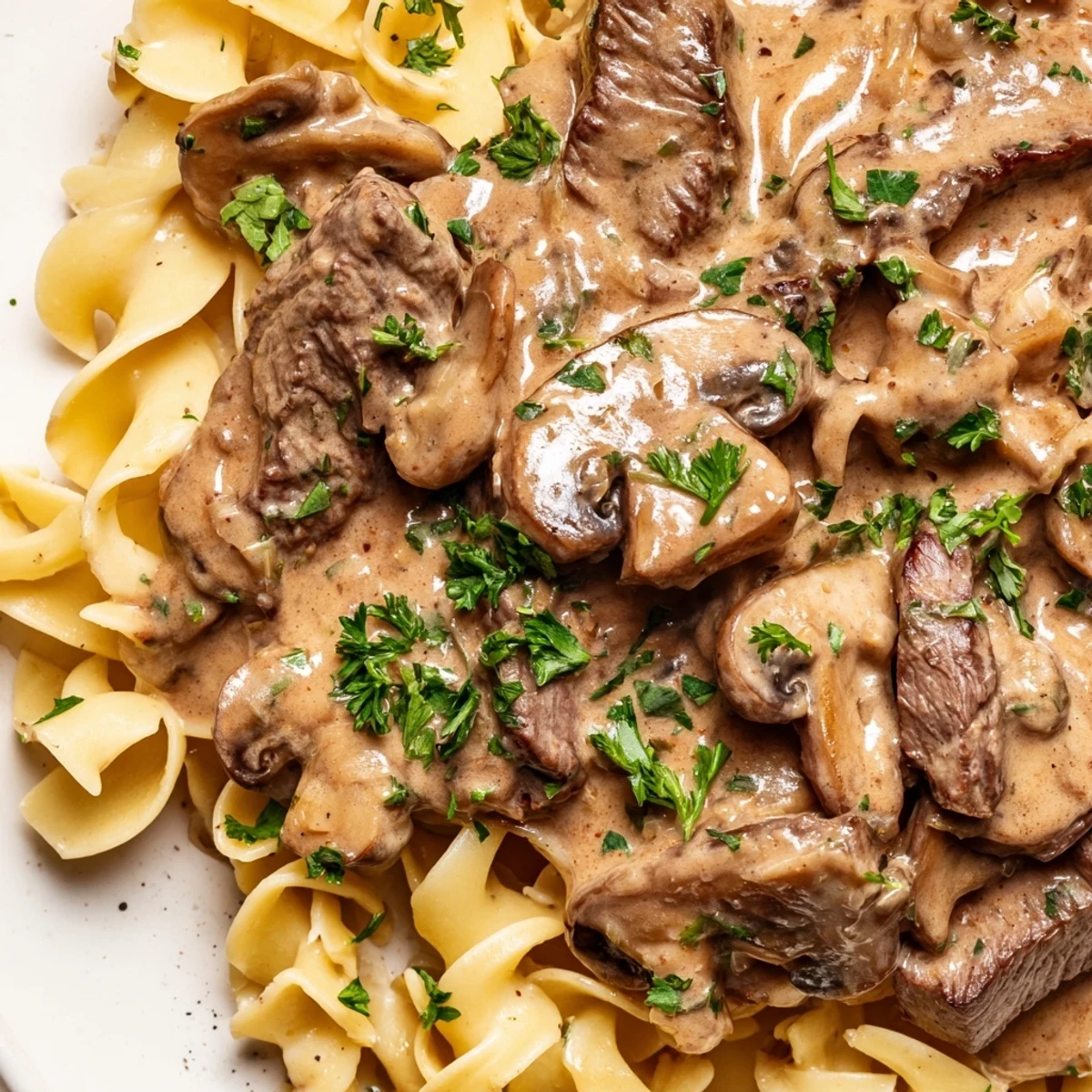
Save This dish features tender strips of seared beef combined with a rich, creamy mushroom gravy made from sautéed onions, garlic, tomato paste, sour cream, and seasoning. Served atop cooked egg noodles, it offers a hearty, satisfying flavor profile with a balance of savory and creamy textures. Garnished with fresh parsley, it’s a warming entrée perfect for a comforting meal. The mushroom gravy enhances the beef’s natural richness without overwhelming, making this a classic, savory comfort dinner.
The first time I made stroganoff, I was trying to recreate something my neighbor described over the fence—tender beef in a silky sauce that somehow tasted both elegant and deeply comforting. I didn't have the fancy ingredients I thought I needed, just what was in my kitchen, and something about that constraint made it work. Now, whenever those first mushrooms hit the hot butter, I'm right back there, surprised that something so restaurant-worthy could come together on a weeknight with nothing more than a good skillet and patience.
I made this for a dinner party once, and my friend who never ate seconds went back for thirds—she just sat there twirling noodles and shaking her head like she couldn't believe it. That's when I realized this dish has a magic to it; it doesn't feel like cooking, it feels like you're taking care of people.
Ingredients
- Beef sirloin or tenderloin (500g): Slice it thin yourself if you can—it cooks faster and more evenly than pre-sliced, and you'll know exactly how thick it is.
- Salt and black pepper: Don't skip seasoning the beef separately; it's the foundation of everything that comes next.
- All-purpose flour (1 tbsp): Just enough to help the beef brown and thicken the gravy later.
- Unsalted butter and olive oil: The combination gives you a high enough smoke point to properly sear the meat without the butter burning.
- Medium onion: Finely chop it so it melts into the gravy rather than staying in distinct pieces.
- Cremini or white mushrooms (300g): Cremini have more flavor, but whatever you use, slice them thick enough that they don't disappear into mush.
- Garlic (2 cloves): Mince it fresh—jarred garlic will taste tinny against the richness of everything else.
- Tomato paste (1 tbsp): This adds depth and a subtle tanginess that balances the cream perfectly.
- Beef broth (1 cup): Use the good stuff if you can; it's the voice of the whole dish.
- Sour cream (1/2 cup): This is where the magic happens—add it at the end and keep the heat low, or you'll end up with scrambled gravy.
- Dijon mustard (1 tsp): A small amount adds sophistication without tasting like mustard.
- Worcestershire sauce (1 tsp): The secret ingredient that makes people ask what you did differently.
- Egg noodles (300g): Their slight chewiness and eggy richness are exactly what this sauce needs.
- Fresh parsley (optional): A tiny bit of brightness at the end, mostly for color and a whisper of freshness.
Instructions
- Season and coat the beef:
- Pat your beef strips dry with paper towels—this is crucial for browning. Toss them with salt, pepper, and flour until every piece is lightly dusted, then let them sit for a minute so the flour clings properly.
- Sear the beef:
- Get your skillet screaming hot with the butter and oil. Work in batches so you don't crowd the pan; each piece needs to touch hot metal and get a deep golden crust, about a minute per side. Don't move them around—let them sit and develop that color.
- Build the base:
- With the beef out of the way, lower the heat slightly and add the remaining butter. Toss in your onions and let them soften and turn translucent, stirring occasionally, about three minutes. Then add the mushrooms and give them time to release their moisture and caramelize, about five to seven minutes until they're golden and smell incredible.
- Deepen the flavor:
- Stir in the garlic and tomato paste, letting them cook for just a minute until fragrant. This step is short but mighty—it's building the aromatic backbone of your gravy.
- Create the gravy base:
- Pour in the beef broth slowly, scraping the bottom of the skillet with a wooden spoon to release all those caramelized bits that are pure flavor. Bring it to a gentle simmer and let it bubble for three to four minutes until it reduces slightly and tastes more concentrated.
- Add the cream:
- Turn the heat down low and stir in the sour cream, Dijon mustard, and Worcestershire sauce slowly, making sure everything combines into a smooth, silky sauce. Return the beef and any accumulated juices to the pan and let it all warm through gently for two to three minutes—never let it boil or you'll break the sauce.
- Cook the noodles:
- While the stroganoff simmers, get a pot of salted water boiling and cook your egg noodles according to the package instructions. Drain them well so they're not waterlogged when they hit the plate.
- Plate and serve:
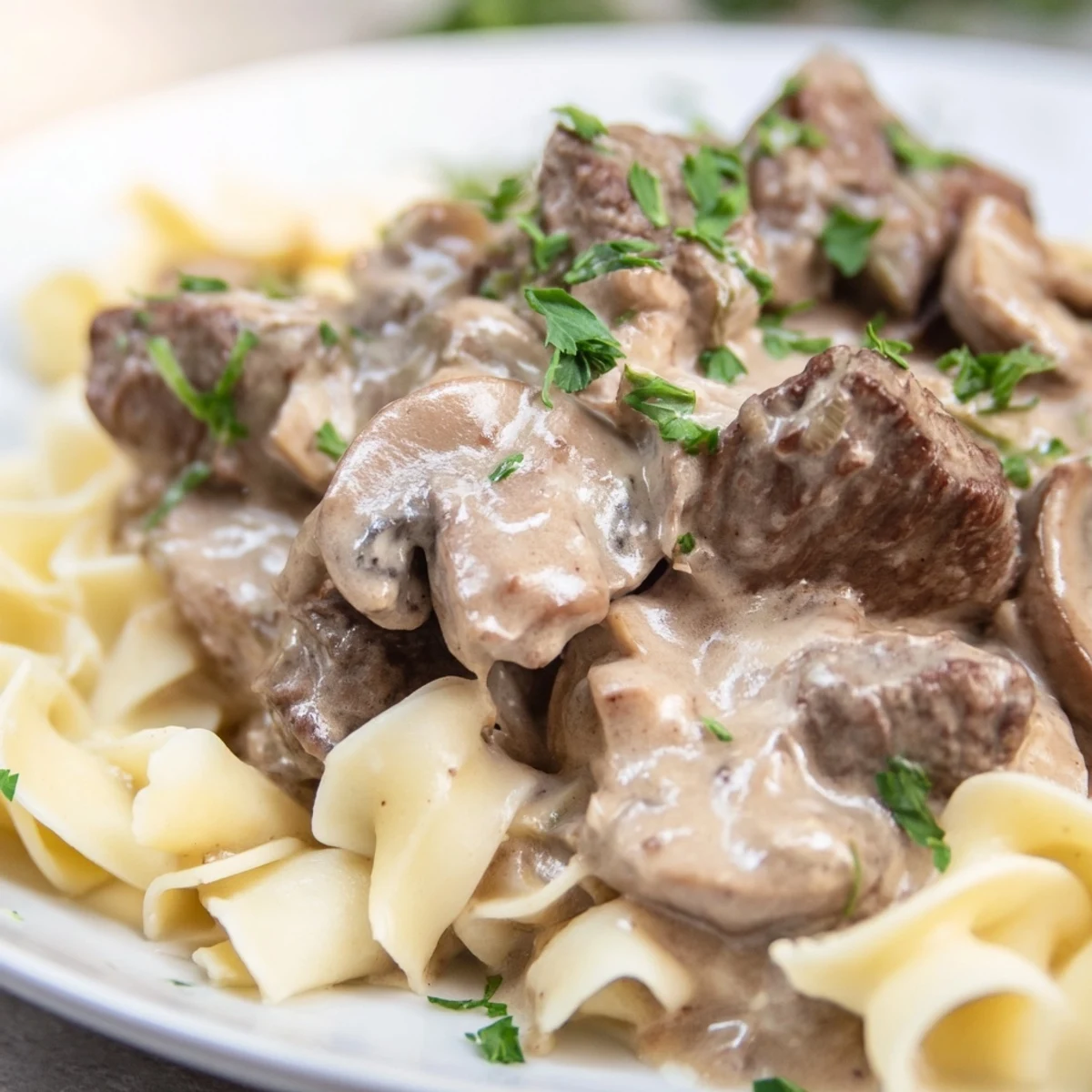
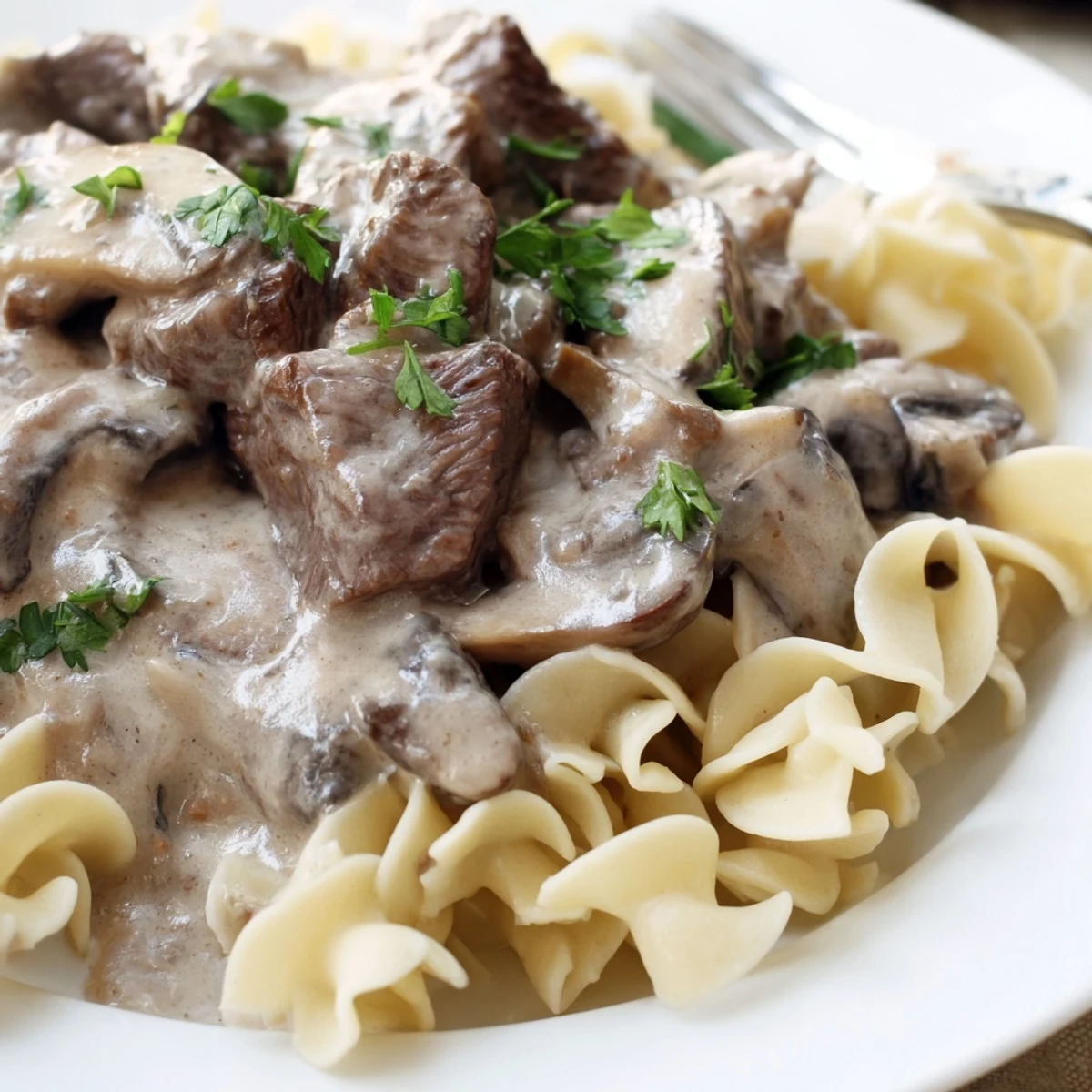
- Divide the noodles among bowls or plates, ladle the stroganoff over the top, and scatter a tiny bit of fresh parsley over each serving if you have it.
 Save
Save There's something about serving this dish that shifts a regular dinner into something warmer and slower. My mom used to say stroganoff was what you made when you wanted people to stay at the table longer, and she was right—no one rushes through this.
Why the Technique Matters
The high-heat sear on the beef isn't just about flavor—it locks in the juices so the meat stays tender even as it simmers in the gravy. The mushrooms develop their deep, almost meaty umami only when given time to caramelize properly, not rushed through on high heat. Every step builds on the one before it, and skipping even one small thing changes the whole personality of the dish.
Variations and Swaps
I've made this with Greek yogurt when I was out of sour cream, and honestly, it works beautifully—you get a slightly lighter tang that still clings to the noodles. Some nights I add a splash of red wine to the broth for extra depth, letting it bubble down for a minute before adding the cream. You could also use egg noodles' cousins—fettuccine or pappardelle would be gorgeous with this sauce, though the cooking time would change slightly.
Serving and Storage
This is best served immediately while the sauce is still creamy and the noodles warm, though it reheats beautifully on the stove top over low heat with a splash of broth to loosen things up. Leftovers are actually better the next day when all the flavors have gotten to know each other, and it keeps in the fridge for three days, frozen for up to a month. It pairs wonderfully with a simple green salad, roasted vegetables, or just crusty bread to soak up every last bit of gravy.
- Taste the gravy before you plate and adjust the seasoning—sometimes an extra pinch of salt or a crack of pepper is all it needs to sing.
- If your sauce breaks or looks grainy, stir in a tablespoon of cold sour cream off the heat and gently warm through again.
- Fresh parsley is optional but add it anyway—that little green moment changes everything about how the dish feels on your tongue.
 Save
Save This recipe is proof that some of the best meals aren't about complexity or fancy techniques—they're about respecting your ingredients and giving them time to become something greater together. I hope it becomes one of those dishes you make over and over, each time a little more confidently, until it tastes like home.
Common Questions
- → What cut of beef works best?
-
Use beef sirloin or tenderloin sliced into thin strips for tenderness and quick cooking.
- → How do I make the mushroom gravy creamy?
-
Stir in sour cream off the heat to create a smooth, creamy texture without curdling.
- → Can I substitute noodles with other sides?
-
Yes, egg noodles are traditional, but mashed potatoes or rice also pair well with the gravy.
- → How long should beef be seared?
-
Sear beef strips quickly 1-2 minutes per side to brown without overcooking.
- → What herbs complement this dish?
-
Fresh parsley adds brightness when garnished, balancing the richness of the gravy.
- → Can sour cream be substituted?
-
Greek yogurt can replace sour cream for a tangy alternative without altering texture much.