
 Save
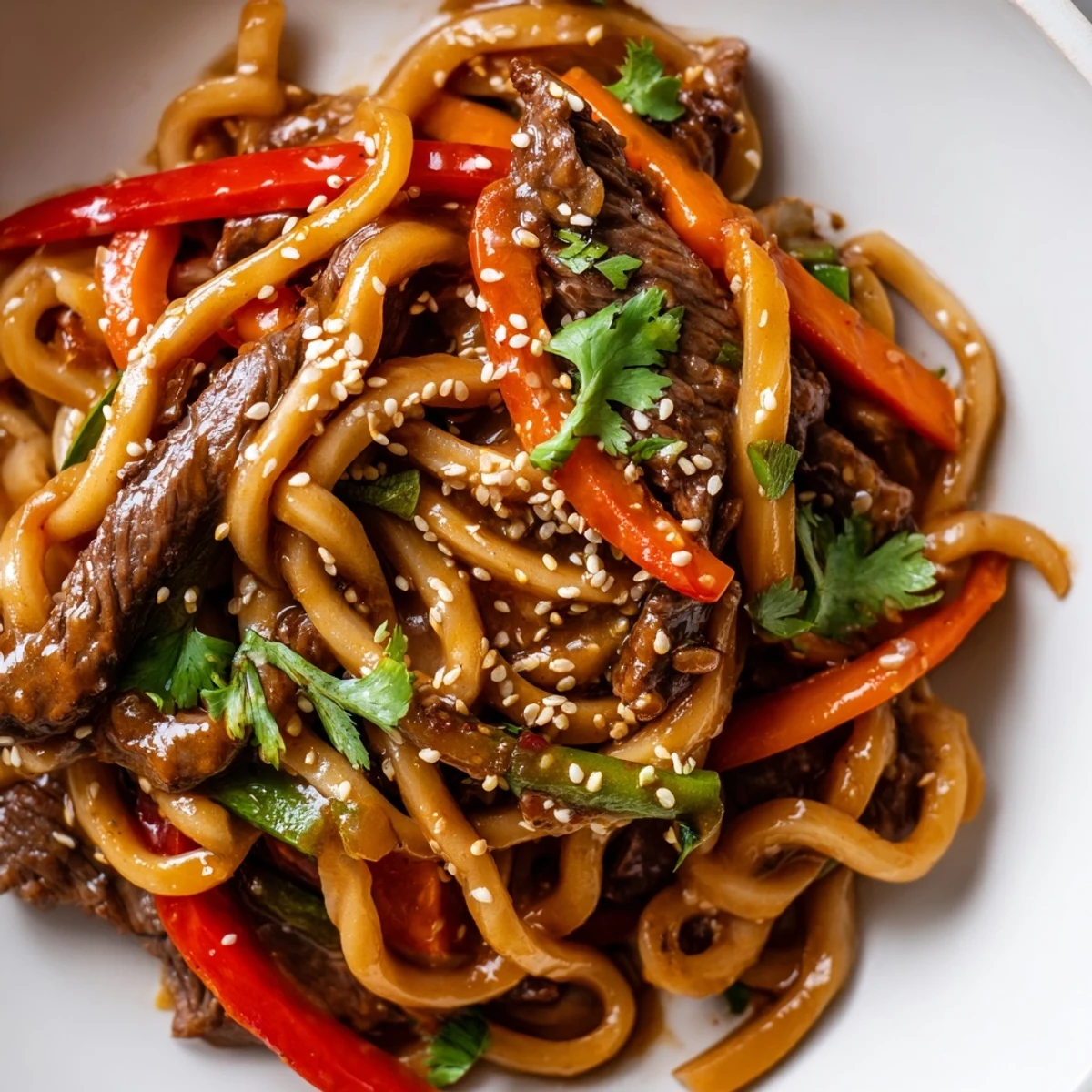
Save Thinly sliced steak marinates quickly before searing in a hot wok alongside colorful bell peppers, carrots, and snap peas. The dish comes together with thick, chewy udon noodles coated in a homemade sauce balancing soy, oyster sauce, chili garlic, and a hint of brown sugar. It is a fast, vibrant meal ideal for busy evenings.
I discovered this stir fry on a Tuesday night when my freezer held nothing but beef and frozen peas, yet somehow my kitchen smelled like a restaurant within twenty minutes. There's something magical about how quickly a wok transforms simple ingredients into something that tastes like you spent hours planning it. My partner looked up from their laptop at the sound of sizzling and asked what I was making, and I realized I didn't even know yet—I was just following instinct and spice. That's when I knew this was going to become a weeknight staple.
The first time I made this for my sister, she arrived straight from work looking absolutely exhausted, and watching her face light up at that first bite was worth every minute of prep. She texted me the recipe the next day asking for exact measurements because she wanted to recreate it at home, which I'm pretty sure is the highest compliment a home cook can receive.
Ingredients
- Flank steak or sirloin, 400g: Slice it thin against the grain, and it becomes almost silky when seared—this one detail makes the difference between chewy beef and tender bites that melt slightly on your tongue.
- Soy sauce (4 tbsp total): Split between the marinade and sauce, it builds a salty backbone that makes everything taste more intentional and rounded.
- Cornstarch, 1 tbsp: This is your secret for beef that stays tender; it creates a protective layer during the high-heat cooking that keeps moisture locked in.
- Sesame oil, 1 tsp (marinade) and more for drizzling: The nutty warmth it adds is subtle but unmissable—don't skip it or substitute vegetable oil here.
- Oyster sauce, 2 tbsp: This carries depth and umami that soy sauce alone can't deliver; it's what makes people ask if you added something special.
- Chili garlic sauce, 1 tbsp: Start here and adjust upward if you like heat; it's where you control the spice level without overwhelming the other flavors.
- Rice vinegar, 1 tbsp: A small touch of brightness that prevents the sauce from tasting flat or one-dimensional.
- Brown sugar, 1 tbsp: It balances the heat and salt with a subtle sweetness that rounds everything out beautifully.
- Red bell pepper and carrot, sliced and julienned: These vegetables provide crunch and natural sweetness that contrasts with the savory sauce and tender beef.
- Sugar snap peas, 100g: They stay crisp even under high heat, giving you those satisfying textural moments in every bite.
- Spring onions, separated: The white parts cook into the sauce for savory depth; the green tops stay fresh and bright as a final garnish.
- Garlic and ginger, minced and grated: These two hit the oil at the start and fill your kitchen with that unmistakable aroma that signals something delicious is happening.
- Fresh udon noodles, 400g: They're chewy and absorb sauce beautifully; if you can't find fresh, pre-cooked vacuum-packed works in a pinch.
- Vegetable oil, 2 tbsp: High-heat cooking demands an oil with a high smoke point, so don't reach for olive oil here.
- Toasted sesame seeds and cilantro: These finish the dish with toasted nuttiness and fresh herbal notes that feel like the chef's final flourish.
Instructions
- Coat and rest the beef:
- Toss your thin-sliced beef with soy sauce, cornstarch, and sesame oil, then step away and let it sit while you prep everything else. This marinade does quiet work, seasoning the meat and helping it stay tender through the aggressive heat that's coming.
- Build your sauce:
- Whisk together the soy, oyster, and chili garlic sauces with rice vinegar, brown sugar, and water until the sugar dissolves completely. Having this ready means you won't scramble once the wok gets hot and things move fast.
- Cook the noodles ahead:
- Follow package instructions, then drain and rinse under cold water to stop them cooking and prevent them from becoming mushy when you toss them with the hot sauce later.
- Sear the beef hard and fast:
- Heat 1 tbsp oil in your wok or skillet over high heat until it shimmers, then add beef in a single layer without moving it around—let it sit for 2–3 minutes to develop that golden crust. Remove it to a plate; you're not cooking it through yet, just building flavor.
- Wake up the pan with aromatics:
- Add the remaining oil, then immediately add garlic, ginger, and the white parts of spring onions, stirring constantly for just 30 seconds. Your kitchen should smell incredible right now, which means you're exactly where you need to be.
- Stir-fry the vegetables:
- Add your bell pepper, carrot, and sugar snap peas, keeping the heat high and your wok moving for 2–3 minutes. You want vegetables that still have a slight resistance when you bite them, not soft or wilted.
- Bring everything together:
- Return the beef to the pan, add your cooked noodles, and pour in the sauce all at once. Toss everything for 2–3 minutes, making sure the noodles get coated and everything heats through evenly.
- Finish with fresh touches:
- Top with green onion tops, sesame seeds, and cilantro, then serve immediately while the noodles still have that perfect slight chew.
 Save
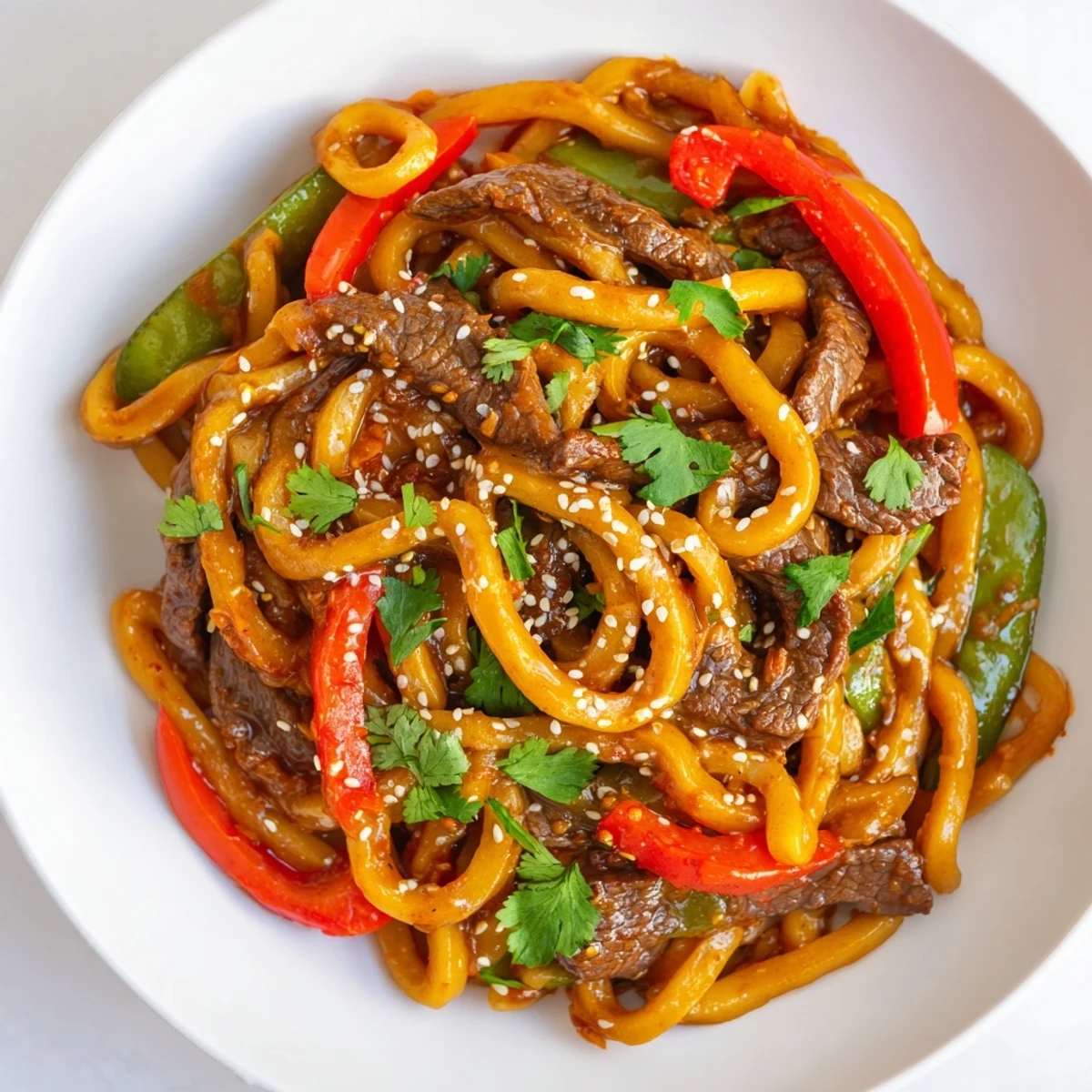
Save The moment I realized this recipe was a keeper was when my kid, who usually picks through stir fry looking for noodles to avoid the vegetables, asked for a second bowl. That kind of win doesn't happen by accident—it happens when every component shows up to do its job, and the sauce ties everything into something that tastes intentional and complete.
The Spice Level Matters
Chili garlic sauce is where your heat comes from, and its intensity varies wildly by brand and bottle. I learned this the hard way when I grabbed a new brand and made a batch that cleared my sinuses and made my eyes water—which was actually kind of amazing, but definitely not what I'd planned. Now I taste a tiny bit on a spoon before committing to the full amount, and I adjust upward gradually if needed. Start with what the recipe calls for, then next time you make it, you'll know exactly how much kick your household can handle.
Building Layers of Flavor
This stir fry works because it builds flavor in stages rather than dumping everything in at once. The beef gets seasoned and protected by cornstarch before it hits the wok; the garlic and ginger hit hot oil to release their aromatics; the vegetables go in and caramelize slightly; and finally the sauce comes in to tie everything together with umami and brightness. Each step is quick, but each one matters for the final taste. When you understand this progression, stir frying stops feeling chaotic and starts feeling intentional.
Why Udon Makes This Special
Udon noodles are thicker and chewier than other Asian noodles, which means they don't break down under the aggressive stirring and heat required in a stir fry. They also absorb sauce like nothing else, so every strand gets coated in flavor rather than just riding on top of a sauce puddle. Fresh udon from the refrigerated section tastes noticeably better than dried, but if you're in a pinch, the vacuum-packed pre-cooked noodles from the Asian market are your friend—just rinse them well and they'll separate beautifully.
- Fresh is worth seeking out because the texture is noticeably more tender and chewy.
- If you find yourself with leftover noodles, they refrigerate beautifully for quick lunches the next day.
- Never skip the cold water rinse after cooking; it stops the cooking process and prevents them from becoming a stuck-together clump.
 Save
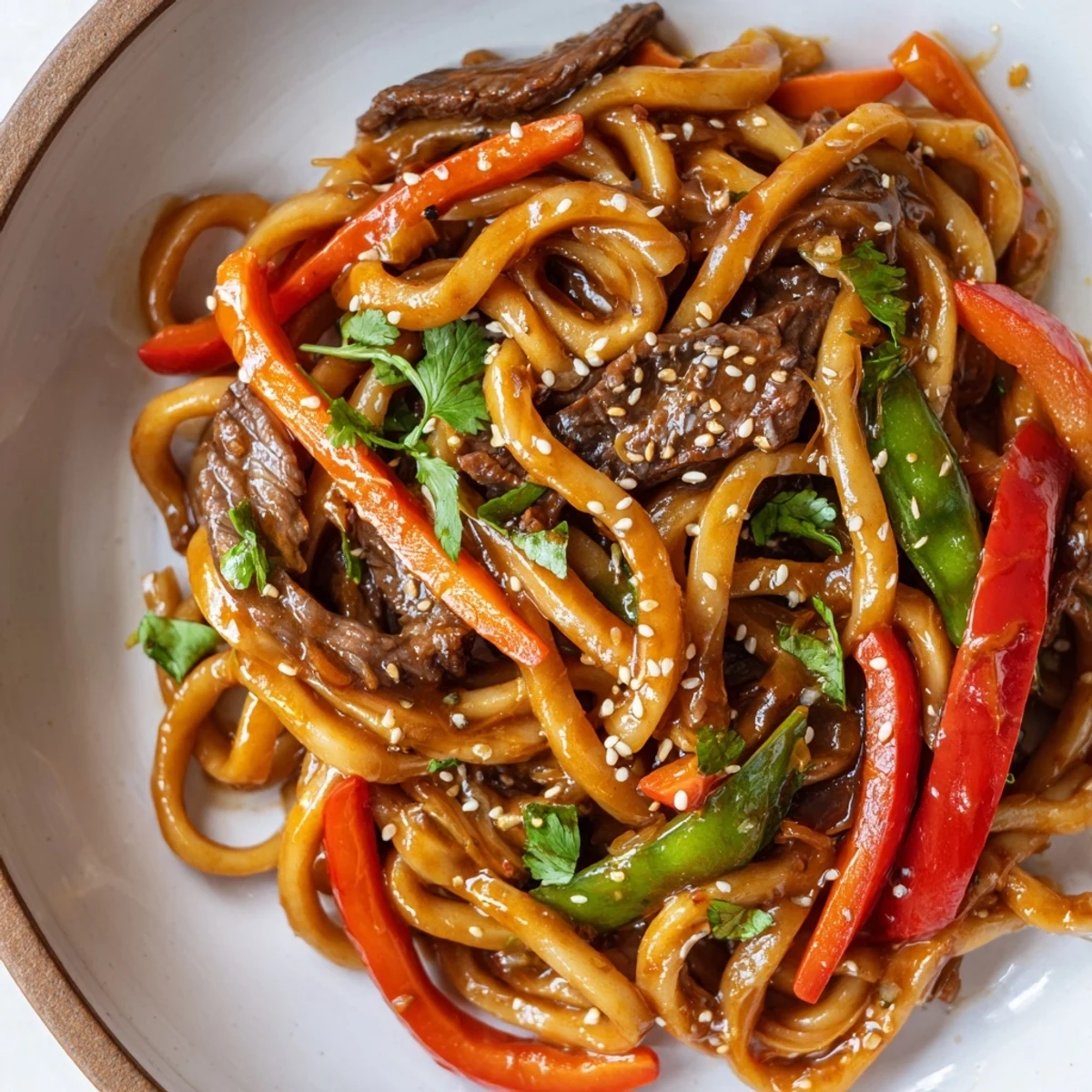
Save This is the kind of meal that turns a regular Tuesday into something worth remembering, and once you've made it a few times, it becomes automatic enough that you can feed people without thinking too hard about it. That's when cooking stops being a chore and becomes just another way to show someone you care.
Common Questions
- → Can I use different proteins?
-
Yes, you can substitute flank steak with sliced chicken breast, shrimp, or firm tofu for a different variation.
- → How can I make this dish gluten-free?
-
Use tamari instead of soy sauce and ensure the oyster sauce is gluten-free. Verify that your udon noodles are made from rice or other gluten-free grains.
- → Is it possible to adjust the spice level?
-
Absolutely. Reduce or omit the chili garlic sauce for a milder taste, or add extra to increase the heat.
- → What vegetables work best in this stir fry?
-
While bell peppers, carrots, and snap peas are standard, broccoli, baby corn, and mushrooms also add great texture and flavor.
- → Do I need a wok to cook this?
-
A large skillet or deep frying pan works well if you do not have a wok, provided it can handle high heat.