
 Save
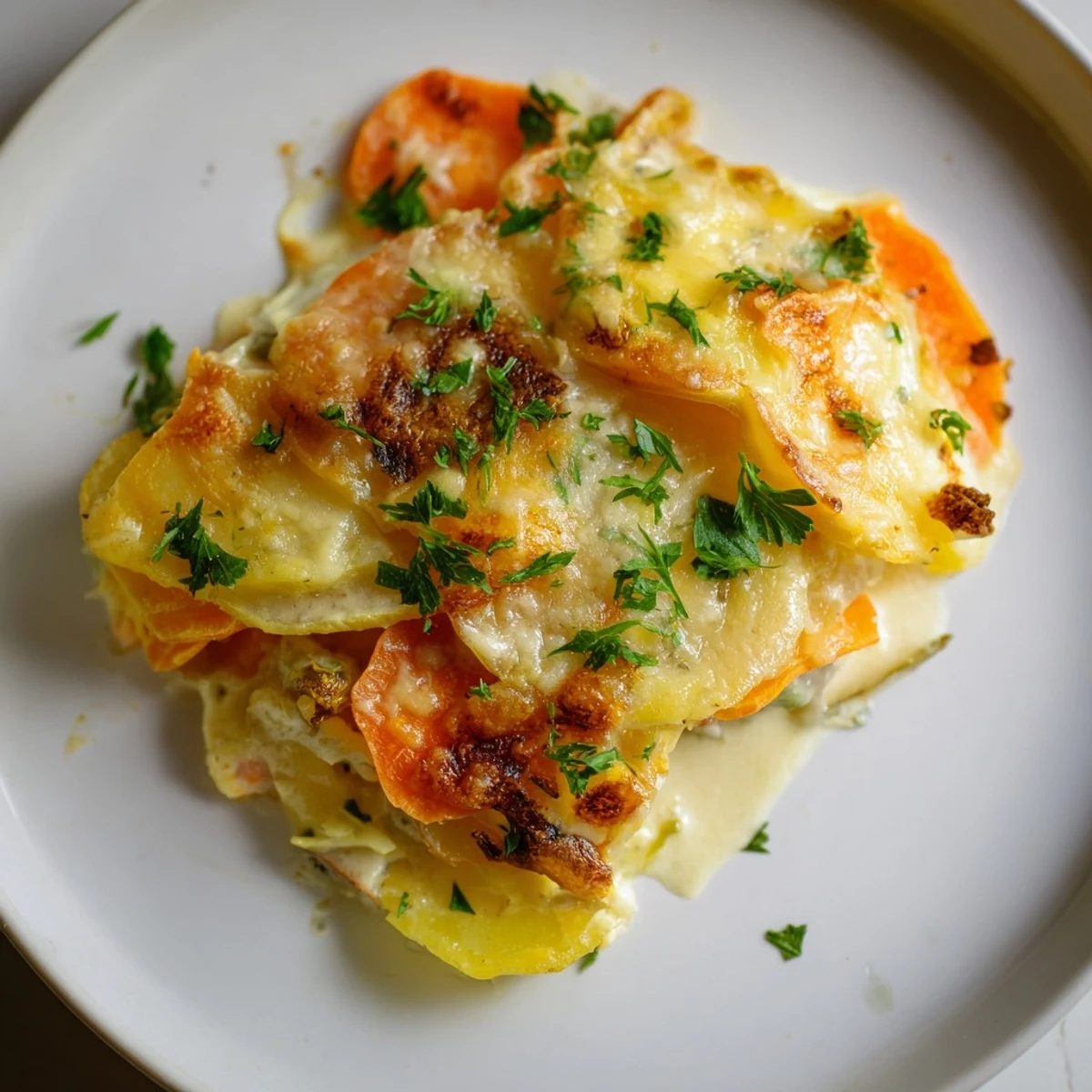
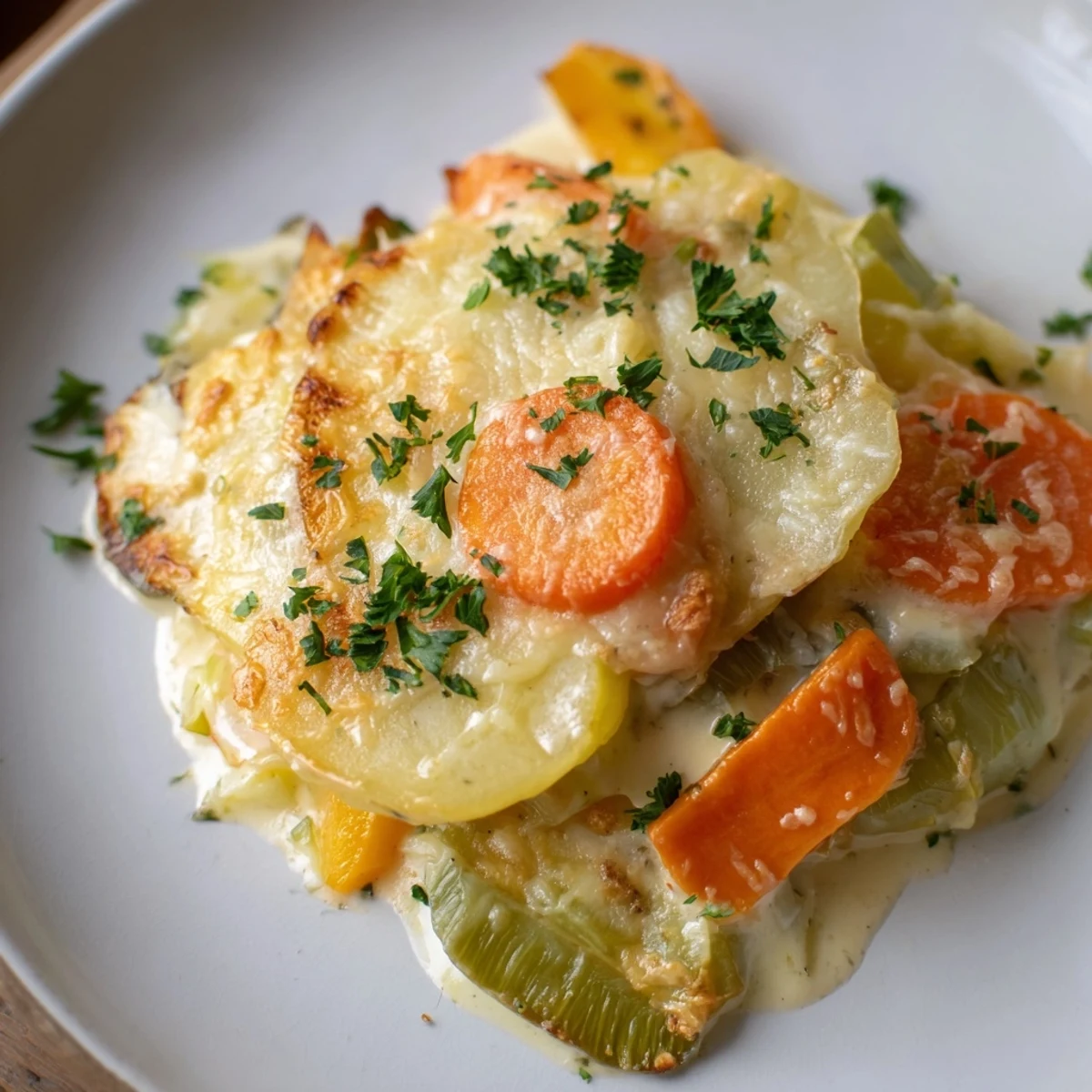
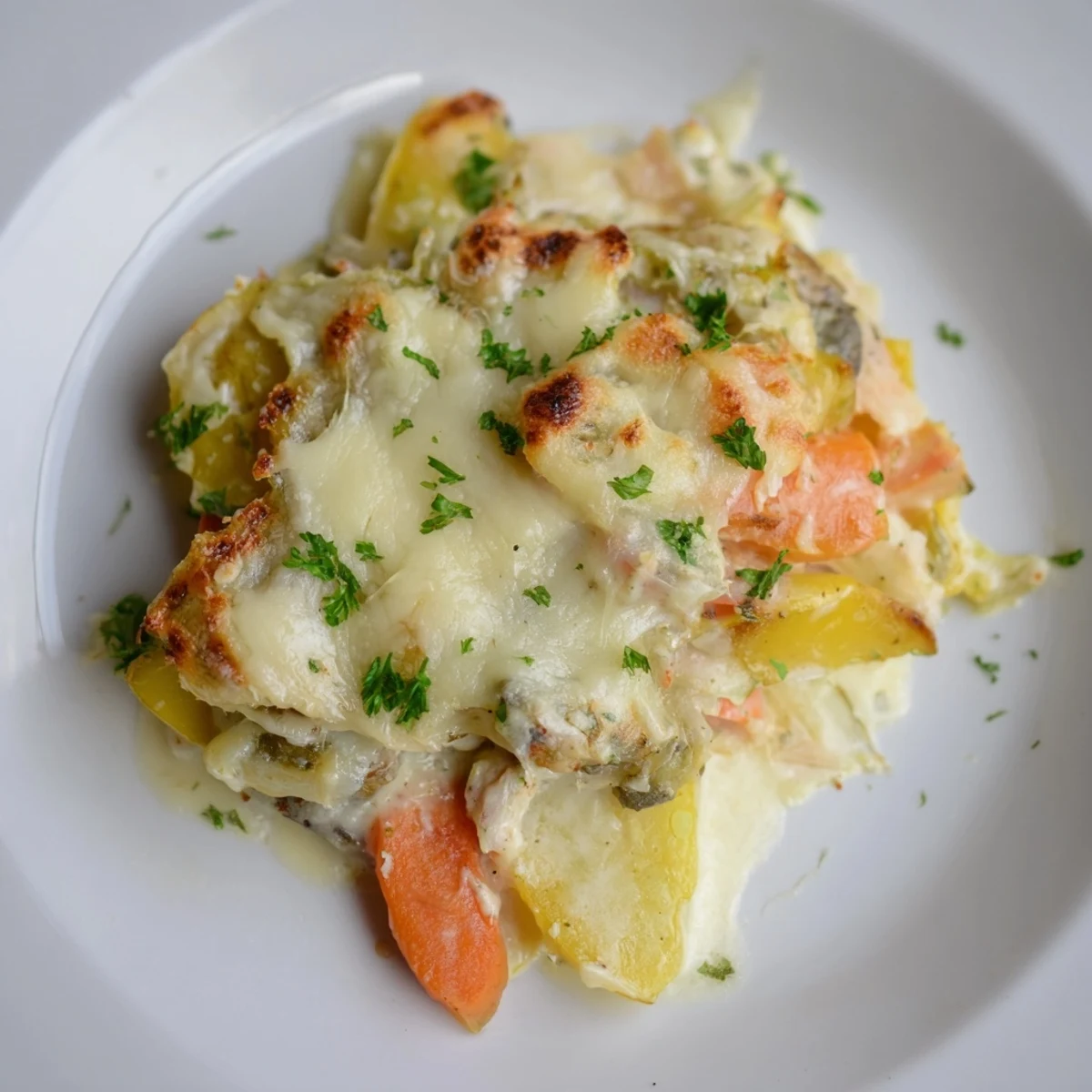
Save This winter vegetable gratin combines sliced parsnips, carrots, rutabaga, potato, celeriac, and leek in a luscious cream sauce made with butter, milk, and a touch of Dijon mustard. Layered and topped with Gruyere and Parmesan, it’s baked until golden and bubbling. A comforting dish that suits both a main course or side, showcasing seasonal roots and a nutty cheese topping.
Baking at 375°F ensures tender vegetables with a crisp, cheesy crust. Parsnips and rutabaga add sweetness and earthiness, while the cream sauce’s subtle nutmeg and mustard deepen the flavors. Garnished with fresh parsley, this gratin offers warmth and richness ideal for chilly days or festive menus.
There's something about a winter kitchen that makes you want to gather everyone around something warm and golden. I was standing in front of my vegetable bin one January evening, staring at a collection of root vegetables that needed rescuing, when the idea of a proper gratin struck me—the kind you'd find in a small French bistro, where the vegetables are so tender they practically melt into this silky cream sauce. My grandmother used to say that the best dishes come from working with what you have, and this gratin proves her right every time.
I made this for the first time during a Sunday dinner when my sister brought her new partner to meet the family, and I remember how quiet the table got when everyone took their first bite—that particular silence that means food has done its job. The conversation picked back up around the dish itself, with everyone asking about the vegetables, the sauce, the cheese, and suddenly I realized I'd found my answer for those winter meals when you want to feel like you've cooked something special without spending your whole day in the kitchen.
Ingredients
- Parsnips and carrots: These sweet root vegetables are the backbone of the gratin—they stay tender when sliced thin and create a natural sweetness that balances the rich sauce.
- Rutabaga: This often-overlooked vegetable brings an earthy depth; it holds its shape beautifully during cooking.
- Yukon Gold potato: Choose this buttery variety over starchy russets, as it creates a creamier texture and won't fall apart.
- Celeriac: Also called celery root, this adds a subtle minerality that makes people ask what the secret ingredient is.
- Leek: The white and light green parts provide a gentle onion flavor that doesn't overpower the other vegetables.
- Butter and flour: A traditional roux gives the sauce body without any lumps or graininess.
- Whole milk and heavy cream: The combination creates a sauce that's rich but not heavy, coating each vegetable slice evenly.
- Dijon mustard: Just a teaspoon adds a subtle tang that brightens the whole dish.
- Nutmeg: Freshly grated is essential here—a pinch of warmth that brings all the flavors together.
- Gruyere and Parmesan: Gruyere melts into creamy pockets while Parmesan adds a crisp, salty finish on top.
Instructions
- Prepare your stage:
- Set your oven to 375°F and butter that baking dish generously so nothing sticks. Having everything prepped before you start the sauce means you're never standing there with a hot pot in hand.
- Slice your vegetables:
- Get them all uniformly thin—a mandoline makes quick work of this if you have one, though a sharp knife and a careful hand work just as well. Uniformity matters here because it helps everything cook at the same rate.
- Build your roux:
- Melt the butter over medium heat, add the flour, and whisk for a full minute so the flour loses its raw taste without browning. You're creating the foundation for a silky sauce, not a brown roux for a darker dish.
- Create the sauce:
- Slowly whisk in the milk and cream, letting the heat do the work of thickening rather than rushing it. Stop when it coats the back of a spoon—you want it thick enough to cling to the vegetables but still pourable.
- Season with intention:
- The mustard adds brightness, the nutmeg brings warmth, and the salt and pepper bring everything into focus. Taste it at this point and adjust—this sauce is the soul of the dish.
- Layer with care:
- Spread half the vegetables in the dish, pour half the sauce over top, then sprinkle half the Gruyere. Then repeat with the remaining vegetables, sauce, Gruyere, and finally the Parmesan on top.
- Bake covered then uncovered:
- The foil for the first 35 minutes keeps everything steaming gently; uncovering for the last 15 minutes lets the top turn golden and crispy. The vegetables will be perfectly tender and the sauce will bubble slightly around the edges.
- Let it rest:
- Those 10 minutes of resting let everything settle and makes serving so much easier. This is when you can pour wine, set the table, or just breathe.
 Save
Save This dish became something more than dinner the night my neighbor mentioned she was feeling lonely after her husband passed, and I found myself insisting she come eat with us. Watching her face light up as she tasted it, seeing her ask for the recipe—I understood then why people love comfort food so much. It's not just about the vegetables and cheese; it's about showing someone they matter.
Vegetable Variations That Work
The beauty of this gratin is its flexibility—you're working with a formula that works for almost any root vegetable that slices thin. Sweet potatoes bring sweetness and a different color, while turnips offer a peppery note that's quite lovely. Parsnips can take center stage or play a supporting role depending on what you have. I once made this with mostly celery root because that's what looked good at the market, and it turned out wonderfully earthy. The core vegetables—potatoes for body, something sweet for balance, something with character for depth—matter more than hitting an exact combination.
The Sauce Is Everything
A properly made béchamel transforms from a basic technique into something people genuinely want to drink straight from the bowl. The secret is patience—low heat, constant whisking, and not rushing the milk and cream incorporation. I learned this lesson the hard way once when I tried to speed things up and ended up with a broken sauce that looked more like pudding. Now I slow down, and every time, the sauce turns out silky and perfect. The mustard and nutmeg are your flavor lifelines here, and they're worth tasting as you go.
Making This Your Own
Once you've made this gratin once, you'll find yourself adjusting it based on mood, season, and what's in your kitchen. Some cooks like to add a layer of sautéed mushrooms, others swear by a whisper of thyme or rosemary stirred into the sauce. The proportions are forgiving enough that you can scale up for a crowd or down for two, and the beauty is that it actually tastes better when made in a deeper dish and eaten the next day—the flavors settle and deepen. This is food that adapts to your life, not the other way around.
- Try adding a handful of sautéed mushrooms or a layer of thinly sliced celeriac if you want extra depth.
- A small pinch of fresh thyme or a bay leaf in the sauce brings subtle herbal notes that complement the vegetables perfectly.
- This dish reheats beautifully covered with foil at 325°F, so it's ideal for make-ahead entertaining.
 Save
Save This gratin sits at the center of my winter cooking because it asks so little and gives so much. Every time I make it, I'm reminded that the best meals are built on simple foundations and made with intention.
Common Questions
- → Can I substitute the Gruyere cheese?
-
Yes, Emmental or sharp white cheddar work well as alternatives, providing similar meltability and flavor depth.
- → What vegetables can I swap in for this dish?
-
Sweet potatoes, turnips, or other root vegetables can replace the listed ones for new flavor variations and texture.
- → How can I make the sauce thicker?
-
Ensure the roux cooks for a minute before adding milk and cream; simmer the sauce gently until it thickens to your desired consistency.
- → Is it possible to prepare this gratin ahead of time?
-
Yes, you can assemble it a day before, cover it tightly, and bake just before serving for fresh, bubbling results.
- → What’s the best way to achieve a golden crust?
-
Bake covered at first to cook vegetables through, then uncover during the last 15 minutes to brown the cheese topping evenly.