
 Save
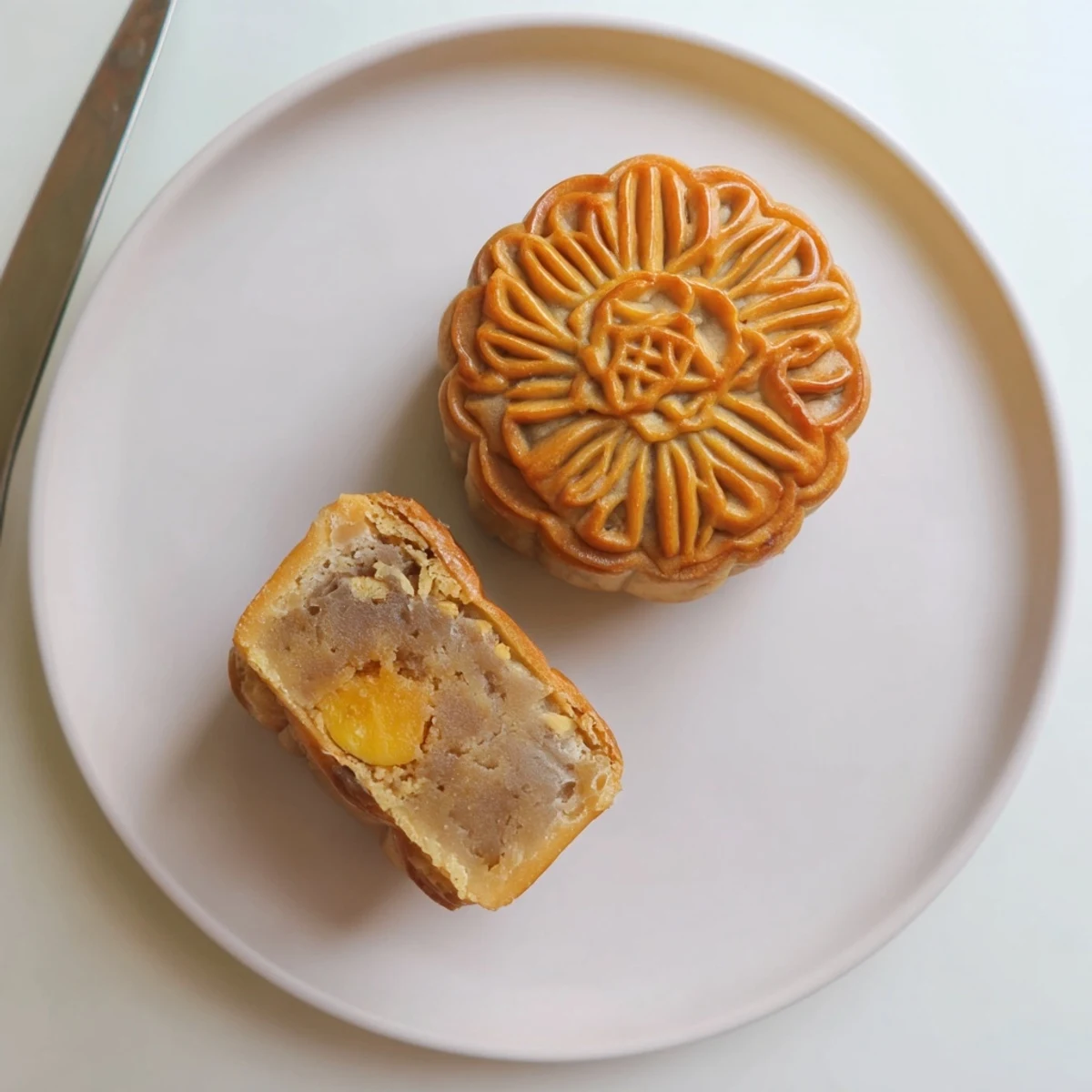
Save These iconic Chinese pastries feature a rich, golden-brown exterior that yields to reveal sweet, dense lotus seed paste surrounding a savory salted egg yolk center. The dough, made with golden syrup and alkaline water, develops that signature tender yet slightly chewy texture that mooncakes are renowned for. After shaping in traditional wooden molds, a quick egg wash creates the glossy, burnished finish.
The process requires patience—allowing the dough to rest and the finished mooncakes to age for 1-2 days helps achieve the characteristic soft skin. While classic lotus paste fills these rounds, red bean or black sesame make excellent alternatives. Serve these alongside hot Chinese tea for the authentic experience.
The afternoon sun hit my grandmother's kitchen counter just right as I watched her transform that glossy golden syrup into something magical. I was twelve, hovering over her shoulder, mesmerized by how the dough came together like silk. She told me mooncakes require patience, something I had in short supply back then. Now every Mid-Autumn Festival, I find myself reaching for that same golden syrup bottle.
Last year I made these for my first proper Mid-Autumn dinner, and my aunt grabbed one, took a bite, and immediately asked where I'd ordered them from. The pride I felt explaining I'd made them myself, complete with slightly imperfect edges, was worth every minute of flour-dusted chaos. We sat around her dining table until midnight, tea steaming between us, mooncakes disappearing faster than I could bake them.
Ingredients
- 200 g all-purpose flour: Forms the tender skin, bread flour makes it too tough while cake flour is too delicate
- 120 g golden syrup: This honey-colored invert sugar is what gives mooncakes their signature amber color and chew, regular syrup will not work the same way
- 50 g vegetable oil: Creates a pliable dough, neutral oils work best so they do not compete with the filling
- 1 tsp alkaline water: Essential for that characteristic springy texture and deep golden color, this ingredient cannot be skipped
- 500 g lotus seed paste: The classic smooth, creamy filling, though red bean paste makes a lovely earthy alternative
- 12 salted egg yolks: Optional but traditional, these creamy, savory centers create the beloved sweet-salty contrast
- 1 egg yolk mixed with 1 tbsp water: Creates that glossy, burnished finish that makes them look like they came from a bakery
Instructions
- Make the glossy dough:
- Whisk golden syrup, vegetable oil, and alkaline water until completely emulsified and smooth, then fold in flour until just combined
- Let it rest:
- Cover the dough and set it aside for 30 minutes while you prepare the filling, this rest is crucial for workable dough
- Prepare the filling centers:
- Divide lotus paste into 12 equal portions and tuck a salted egg yolk inside each one if using, sealing completely
- Shape the mooncakes:
- Flatten each dough piece and wrap around a filling ball, pinching edges closed, then press into a lightly floured mold and release
- First bake:
- Bake at 180°C for just 5 minutes to set the shape, then cool completely before glazing
- Glaze and finish:
- Brush gently with egg yolk mixture and return to oven for 15 to 20 minutes until deeply golden
- The waiting game:
- Cool completely then store airtight for 1 to 2 days, letting the skin soften into that signature tender texture
 Save
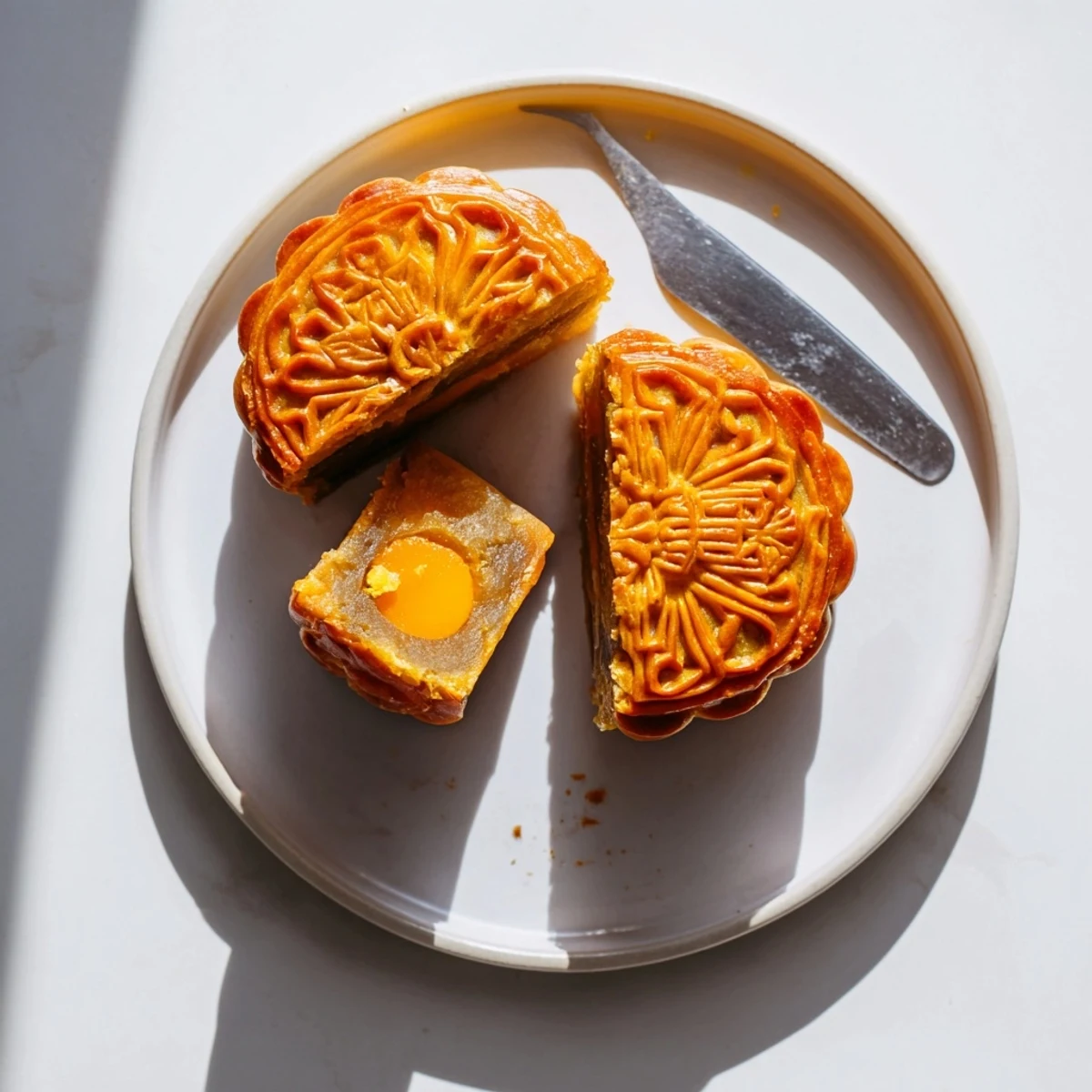
Save My first batch looked like lumpy rocks because I did not let the dough rest long enough and rushed the shaping process. But my family ate them anyway, laughing as they struggled through the tough skins, and somehow those imperfect mooncakes became the most requested ones. Sometimes the flawed attempts become the best memories.
The Art of Molding
Heavily dust your mold with flour before each use, tapping out excess, because nothing ruins the moment faster than a mooncake stuck inside the intricate design. Release onto your tray with a firm, confident tap, hesitation is your enemy here.
Choosing Your Filling
Lotus paste offers the most traditional experience but red bean paste brings a lovely earthiness, while black sesame paste adds a nutty depth that pairs beautifully with the salted egg yolks. Whichever you choose, keep the portions consistent so they bake evenly.
Tea Pairings
The rich, dense filling needs something to cut through the sweetness, and nothing does this better than Chinese tea. Pu-erh or oolong are traditional choices but even a simple jasmine tea works wonderfully.
- Serve mooncakes in small wedges because they are incredibly rich
- Warm tea helps balance the dense texture and sweet filling
- Leftovers keep for weeks in the refrigerator if properly sealed
 Save
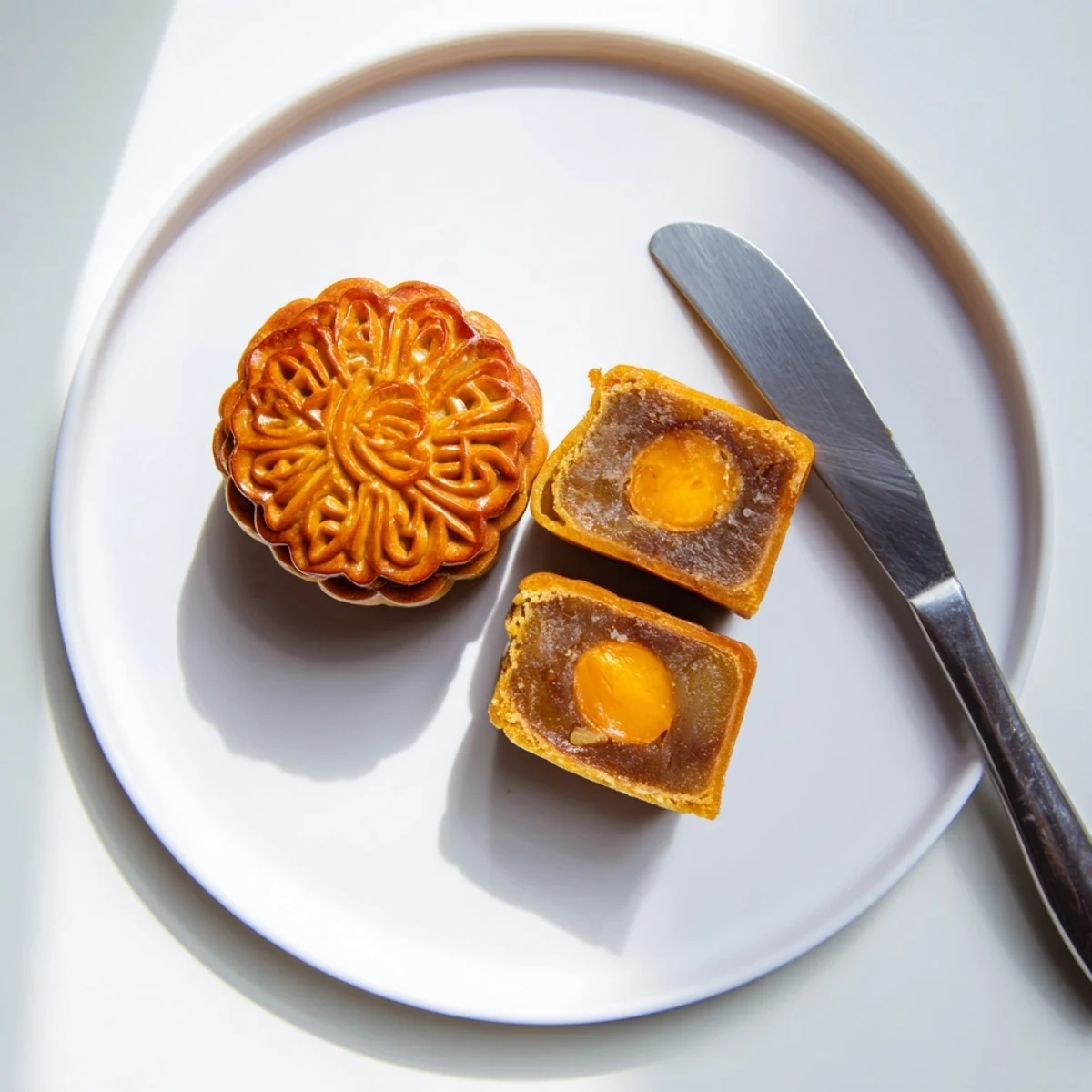
Save There is something profoundly satisfying about pulling a tray of golden mooncakes from the oven, the intricate designs glowing against the dark filling. May your Mid-Autumn Festival be filled with good company and even better mooncakes.
Common Questions
- → What makes mooncakes different from other pastries?
-
Mooncakes are distinctively dense and rich, featuring a tender golden skin made with golden syrup and alkaline water. The texture is unique—slightly chewy yet yielding, enclosing sweet fillings like lotus seed paste. Traditional versions include a salted egg yolk center, representing the full moon.
- → Why do mooncakes need to rest before serving?
-
Allowing mooncakes to rest in an airtight container for 1-2 days after baking softens the skin, developing that signature tender texture. This aging process helps the moisture distribute evenly throughout the pastry and filling, making them easier to slice and more enjoyable to eat.
- → Can I make mooncakes without a traditional mold?
-
While traditional molds create the intricate designs and distinct shape, you can form mooncakes by hand or use small tartlet pans. The taste will remain the same, though you'll miss the beautiful imprinted patterns. Some bakers use clean, deeply carved rubber stamps as alternatives.
- → What does alkaline water do in mooncake dough?
-
Alkaline water, also called lye water, gives mooncake skin its characteristic golden color and slightly springy texture. It neutralizes the acidity in golden syrup, helps browning during baking, and creates that authentic mooncake taste and mouthfeel that's difficult to replicate without it.
- → How long can homemade mooncakes be stored?
-
Properly stored in an airtight container at room temperature, homemade mooncakes typically keep for 1-2 weeks. For longer storage, refrigerate for up to a month or freeze for 2-3 months. Bring to room temperature before serving for the best texture and flavor.