
 Save
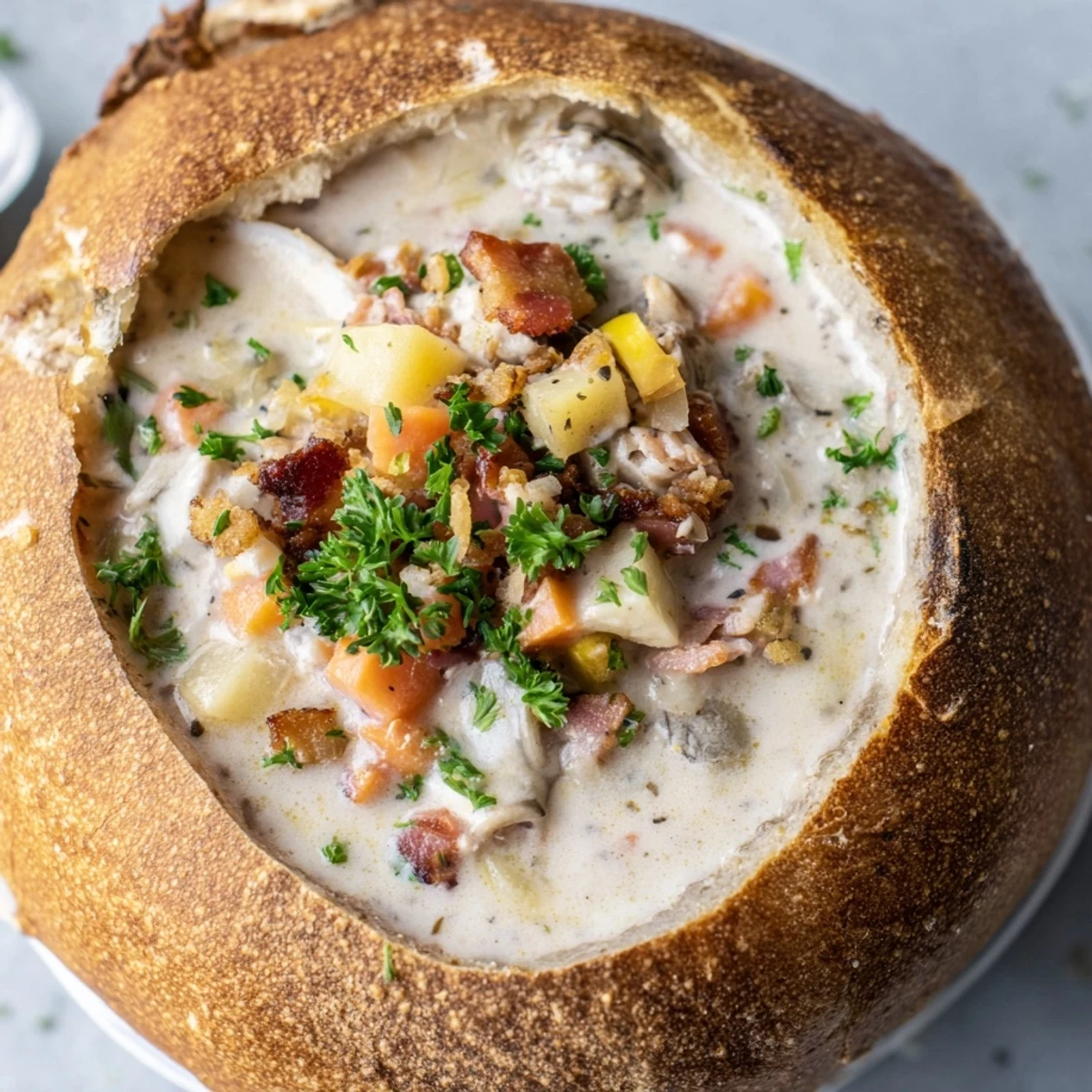
Save This comforting New England-style chowder blends tender chopped clams, smoky bacon, diced potatoes, and fresh vegetables in a creamy broth. Slowly simmered with garlic, herbs, and spices, it is served inside crisp sourdough bread bowls for a classic coastal flavor. The roux thickens the chowder, creating a velvety texture, while fresh parsley brightens each bite. Perfect for a medium-level cooking experience, it yields four hearty servings perfect for a cozy meal.
There's something about a bowl of clam chowder that stops time, especially when you're sitting by a window watching the rain and the bread around you is still warm enough to steam. I discovered this recipe during a particularly grey October when a friend from Maine visited and quietly taught me that chowder isn't something you rush—it's something you tend to, layer by layer, until the kitchen smells like the ocean decided to visit. The sourdough bowl isn't just clever serving; it's edible comfort that softens into the broth, making you wonder why every chowder hasn't always been served this way.
I made this for my partner on our first winter together, and watching them tear into the sourdough bowl with a spoon, getting that perfect mix of creamy chowder and toasted bread crust, made me understand why people talk about food memory the way they do. That moment—the quiet contentment, the steam rising between us—became the reason I come back to this recipe whenever I want to say something without words.
Ingredients
- Clams (2 cans, chopped): Canned clams are a secret weapon—they're already cooked and tender, and draining them means you're not adding extra liquid that throws off your chowder consistency.
- Bottled clam juice (1 cup): This is where the ocean flavor lives, and mixing it with reserved clam liquid gives you a deeper briny base without oversalting.
- Russet potatoes (2 cups, diced): These break down slightly as they cook, thickening the chowder naturally and creating a creamy texture without needing extra cream.
- Onion, celery, carrots (1 cup each): This holy trinity builds the foundation—cook them long enough that they soften completely and their natural sugars caramelize slightly.
- Bacon (4 slices, diced): Cook it until it's properly crisp, not just limp, because the fat and texture are non-negotiable.
- Butter and flour (2 tablespoons each): Your roux keeps everything silky and prevents graininess—don't skip the two-minute cook time to develop it properly.
- Heavy cream and whole milk (1.5 cups and 1 cup): Use both because heavy cream alone can curdle if you're not careful, and whole milk keeps things balanced.
- Garlic (2 cloves, minced): Add it after the softer vegetables so it doesn't brown and turn bitter.
- Thyme and bay leaf: These are your quiet background singers—essential but never the star.
- Sourdough bread boules (4 small): Choose bread that's dense enough to hold up to the chowder without getting soggy in the first thirty seconds.
Instructions
- Hollow out your bread bowls first:
- Cut the tops off each sourdough boule and scoop out the insides, leaving about an inch of crust to hold the chowder. Set them aside and try not to eat the warm bread pieces you just removed—this is harder than it sounds.
- Render the bacon until it's crisp:
- Diced bacon in a cold pot, then medium heat, stirring occasionally until it's brown and crunchy. Remove it with a slotted spoon and drain on a paper towel, leaving behind the golden fat that'll flavor everything.
- Build your aromatic base:
- In that bacon fat, add butter and then onion, celery, carrots, and garlic. Cook for about five minutes, stirring often, until the vegetables soften and the kitchen fills with that sweet, savory smell that tells you you're doing this right.
- Make your roux without lumps:
- Sprinkle flour over the vegetables and stir constantly for two minutes—you're creating a paste that will thicken the chowder without flour taste. Don't rush this step.
- Add your liquids slowly:
- Pour in the clam juice bit by bit, whisking as you go to keep it smooth. This is where most people get lumps, so patience with the whisk is your friend.
- Cook the potatoes until they're tender:
- Add diced potatoes, thyme, bay leaf, salt, and pepper. Bring to a simmer and let them cook for about fifteen minutes—they should be fork-tender and starting to soften the broth naturally.
- Finish gently with the clams and dairy:
- Stir in the drained clams, reserved bacon, milk, and cream. Keep the heat at a gentle simmer for five minutes, never boiling, because boiling cream can break and separate. Remove the bay leaf, taste, and adjust seasoning.
- Garnish and serve immediately:
- Stir in fresh parsley, ladle hot chowder into your bread bowls, and serve right away while everything is still steaming.
 Save
Save Years later, I still make this chowder the way it's meant to be made, slowly and with attention, because it taught me that the best cooking isn't about speed or Instagram-worthy plating—it's about showing up in the kitchen and doing something kind for the people you're feeding. Every time, someone asks if they can have the recipe, and I always smile because I know they're about to discover what I did: that sometimes the most ordinary ingredients, treated with care, become something that feels like home.
The Sourdough Bowl Matters
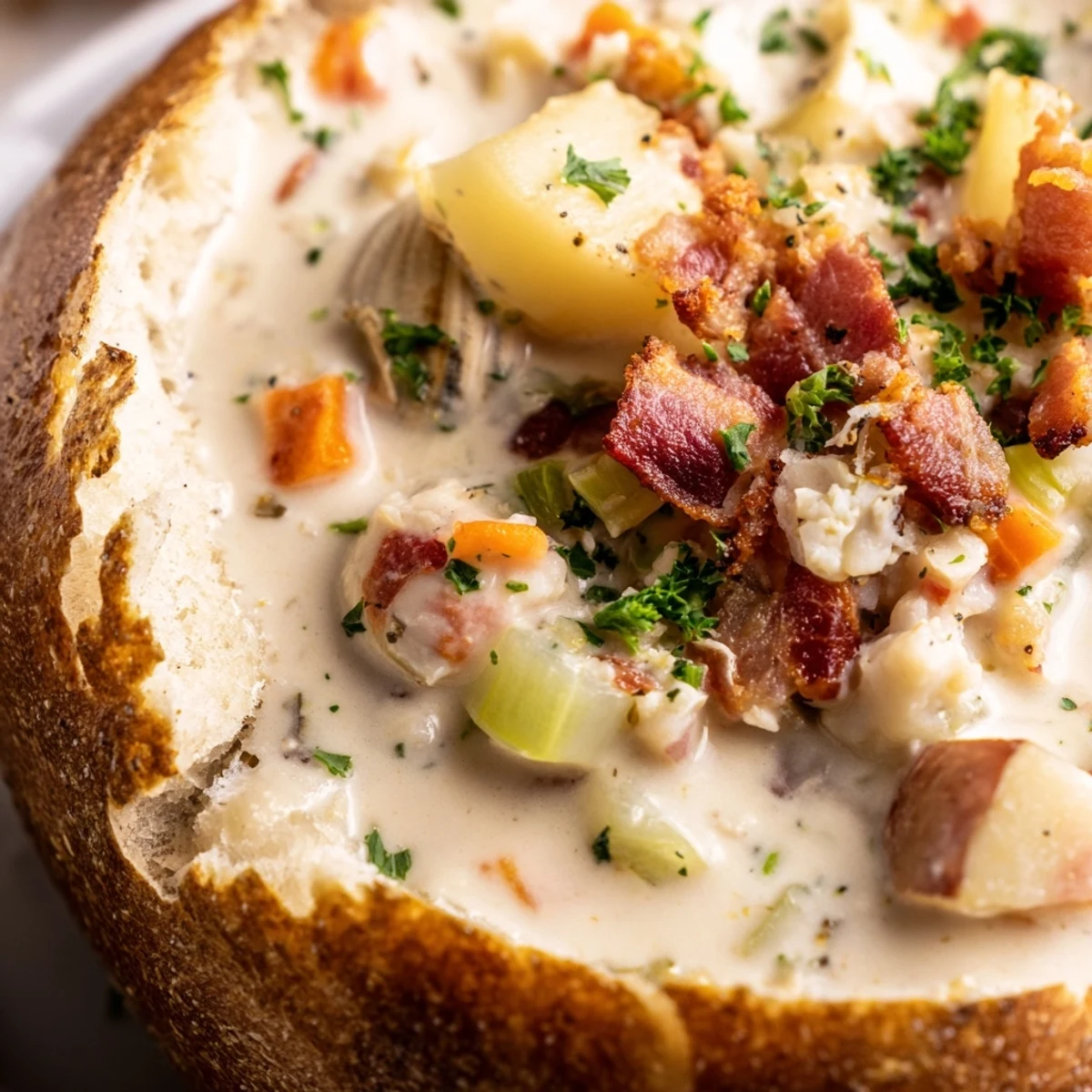
The bread bowl isn't decorative—it's functional and delicious, designed to soften gradually as it absorbs the chowder, creating this perfect textural moment somewhere between bread and stew. Choose a sturdy sourdough with good crust and an open crumb; cheap bread will disintegrate into mush, but good bread holds its structure for at least ten minutes while you eat. If your bread boules are hard to find, you can substitute with thick slices of crusty bread on the side, though you'll lose that magical moment when you dig down and hit the soft interior that's been steaming in the bowl.
Timing and Make-Ahead Strategy
The chowder base can be made up to two days ahead—just wait until the very end to add the clams, bacon, and dairy. Reheat gently over medium-low heat, then stir in those final ingredients without boiling, and the texture stays perfect. The bread bowls are best hollowed out an hour or two before serving so they're fresh but not so fresh that they're still steaming and difficult to handle.
Variations and Wine Pairing
This recipe is forgiving enough to let you add a splash of dry white wine with the clam juice for extra depth, or use half-and-half instead of heavy cream if you want something slightly lighter. Pair it with a crisp Sauvignon Blanc or Chardonnay that has enough body to stand up to the richness, and try a Pinot Grigio if you lean toward something more delicate.
- A handful of oyster crackers on the side adds textural contrast and gives people something to do with their hands while they eat.
- Fresh lemon juice whisked in at the very end brightens everything without making it taste fishy.
- Smoked paprika instead of regular black pepper creates a subtle depth that makes people ask what your secret ingredient is.
 Save
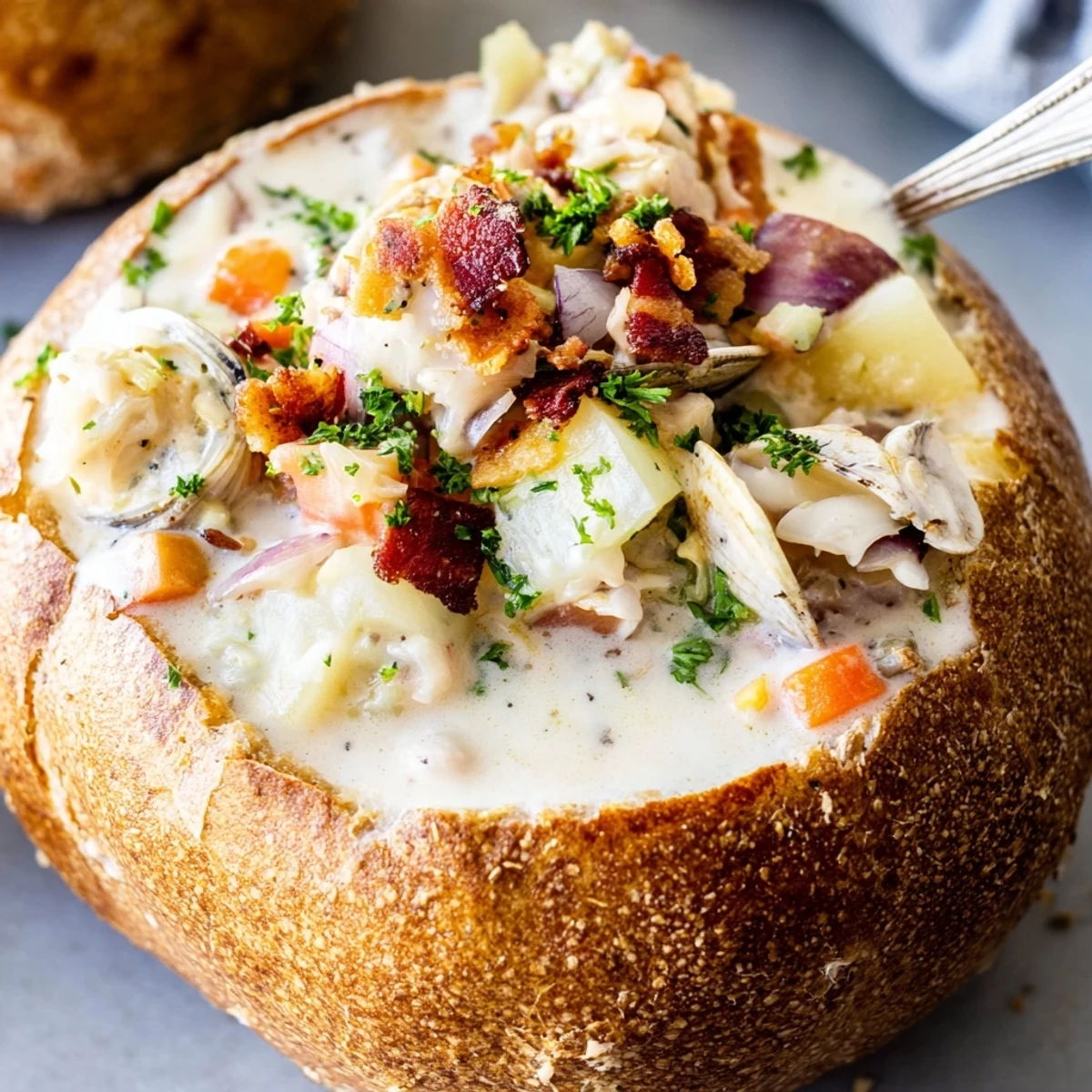
Save This chowder is the kind of recipe that becomes yours once you make it—you'll find your preferred thickness, your favorite garnish, your own reason for coming back to it. That's exactly how it should be.
Common Questions
- → What type of clams work best for this dish?
-
Canned chopped clams provide convenience and consistent flavor, with reserved juice enhancing the broth. Fresh clams can be used but require additional prep.
- → How do you prepare the sourdough bowl for serving?
-
Slice off the top of the sourdough boule and hollow out the center, leaving about a 1-inch thick shell to hold the chowder without leaking.
- → Can I substitute heavy cream in this chowder?
-
Yes, half-and-half can be used for a lighter texture, though the chowder will be less rich and creamy.
- → What is the purpose of making a roux in the recipe?
-
The roux, made by cooking flour with butter, thickens the broth to create a smooth, velvety chowder consistency.
- → How can I enhance the flavor of the chowder?
-
Adding a splash of dry white wine with the clam juice or garnishing with cooked bacon bits and fresh parsley adds depth and brightness.
- → What are good beverage pairings with this dish?
-
Crisp white wines such as Sauvignon Blanc or Chardonnay complement the creamy and smoky flavors perfectly.