
 Save
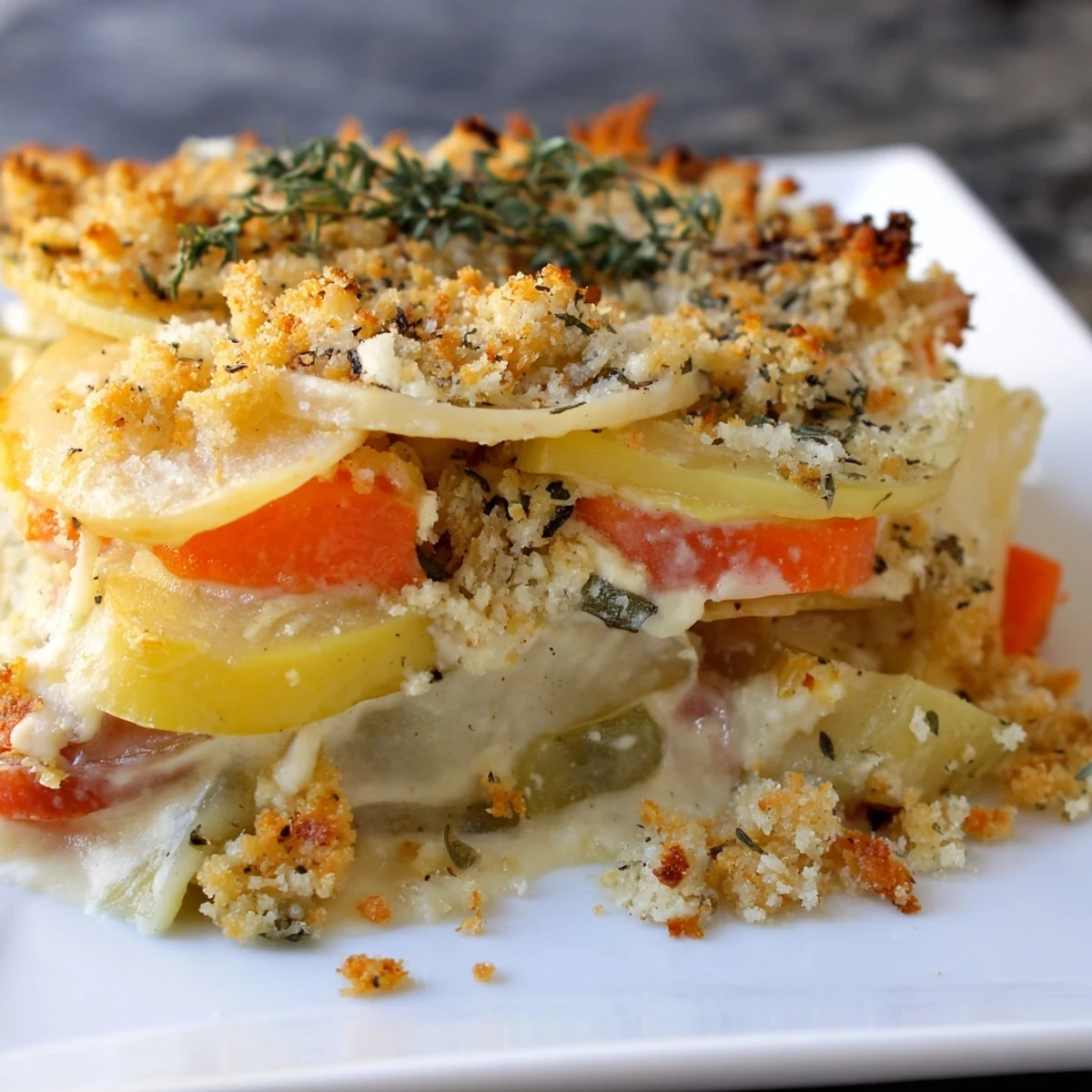
Save This comforting gratin highlights a blend of winter vegetables like Yukon Gold potatoes, parsnips, carrots, rutabaga, and leeks, thinly sliced and layered with a creamy sauce infused with nutmeg, salt, and pepper. Gruyere and Parmesan cheeses add richness, topped with buttery breadcrumbs and fresh thyme for a crisp finish. Baked until golden and tender, it’s an ideal cozy dish for chilly evenings, offering a blend of textures and flavors that celebrate seasonal ingredients.
The wind was howling against my kitchen window last January when I first attempted this gratin. I had a CSA box full of stubborn root vegetables and no plan, until I remembered how the French always seem to make winter vegetables taste like luxury. My kitchen filled with the most incredible aromas, nutmeg and butter and something deeply comforting that made me forget the storm outside completely.
I served this at my first winter dinner party, nervously checking the oven every five minutes. When my friend Sarah took her first bite and actually went quiet, I knew I had something special. Now it is the dish everyone requests when the temperature drops below freezing.
Ingredients
- Yukon Gold potatoes: Their creamy texture holds up beautifully while becoming tender in the sauce, unlike russets which can fall apart
- Parsnips: These add a subtle natural sweetness that balances the rich cheese sauce perfectly
- Carrots: Choose thinner carrots if possible, they will cook more evenly and add lovely color to the layers
- Rutabaga: This earthy vegetable gives the gratin depth, though celeriac works wonderfully if you prefer something more subtle
- Leek: The white parts become meltingly tender and add a mild onion flavor without overpowering the dish
- Butter and flour: This classic roux base creates the silkiest sauce that clings to every vegetable slice
- Whole milk: Do not be tempted to use low fat, the richness is essential for that luxurious French texture
- Freshly grated nutmeg: Just a half teaspoon transforms the sauce from ordinary into something warm and complex
- Gruyere cheese: Its nutty flavor is traditional here and worth seeking out, though aged Swiss can substitute
- Parmesan cheese: Adds a salty sharpness that cuts through the rich cream sauce
- Fresh breadcrumbs: Making your own from day old bread creates that perfectly crisp, golden topping
- Fresh thyme: The herb is optional but adds a lovely earthy note that complements the root vegetables
Instructions
- Preheat your oven and prepare the baking dish:
- Rub the dish with a cut garlic clove if you want an extra layer of flavor, then butter it generously so nothing sticks
- Slice all your vegetables:
- Aim for about one eighth inch thick, using a mandoline if you have one for perfectly even layers that cook at the same rate
- Make the roux base:
- Melt butter in your saucepan until foaming, whisk in flour for exactly one minute so it loses that raw flour taste
- Build the bechamel sauce:
- Whisk in the milk gradually, letting it thicken between additions, then season with nutmeg, salt and pepper
- Layer the gratin:
- Start with vegetables, then sauce, then cheese, and repeat, making sure every vegetable slice gets coated
- Create the crispy topping:
- Mix breadcrumbs with melted butter and thyme until everything is evenly moistened
- Bake covered first:
- The covered baking time steams the vegetables tender, so do not rush this step or you will have crunchy vegetables
- Uncover and brown:
- Watch closely during the last fifteen minutes until the top is deeply golden and the cheese is bubbling up the sides
- Let it rest:
- This ten minute wait feels impossible but helps the gratin set so you can serve neat portions instead of a spoonful of mess
 Save
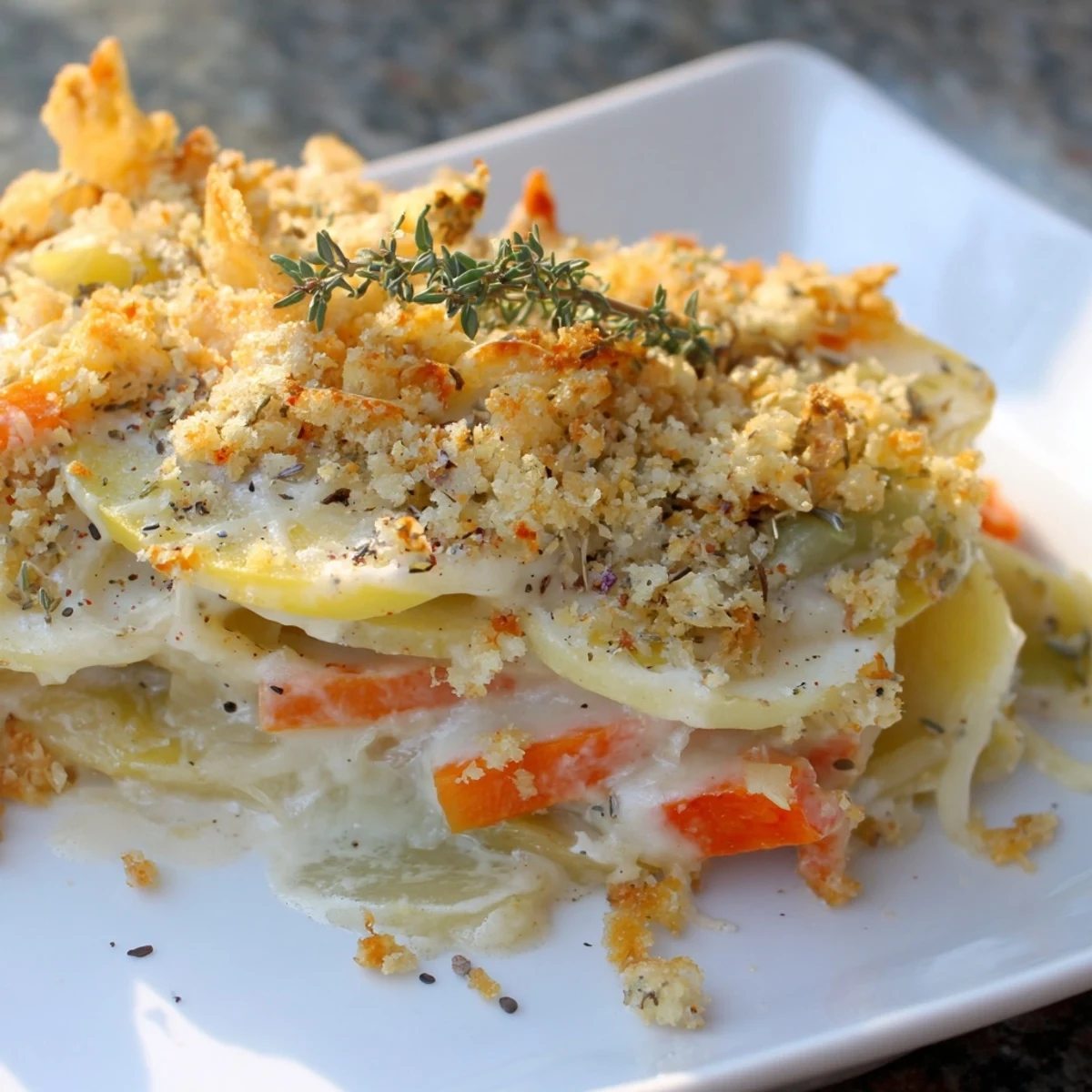
Save This gratin has become my answer to every winter invitation, the dish I bring when I want people to feel taken care of. Something about those tender vegetables in their creamy blanket just makes everyone slow down and linger at the table longer.
Making It Ahead
You can assemble the entire gratin up to a day before baking, which actually helps the flavors meld together. Cover tightly and refrigerate, then add about ten minutes to the covered baking time since it will be cold. The topping stays surprisingly crisp even after refrigerating overnight.
Vegetable Swaps
Butternut squash adds lovely sweetness while sweet potatoes bring vibrant color. I have used celeriac for a more subtle flavor and turnips when I wanted extra bite. The key is keeping the total volume the same and slicing everything uniformly.
Serving Suggestions
A crisp green salad with acidic dressing cuts through the richness beautifully. Roasted chicken or pork tenderloin make excellent mains, though the gratin is substantial enough to stand alone with just the salad.
- Let leftovers come to room temperature before reheating for the best texture
- A small square makes an incredible breakfast topped with a fried egg
- The flavors deepen overnight so this is even better the next day
 Save
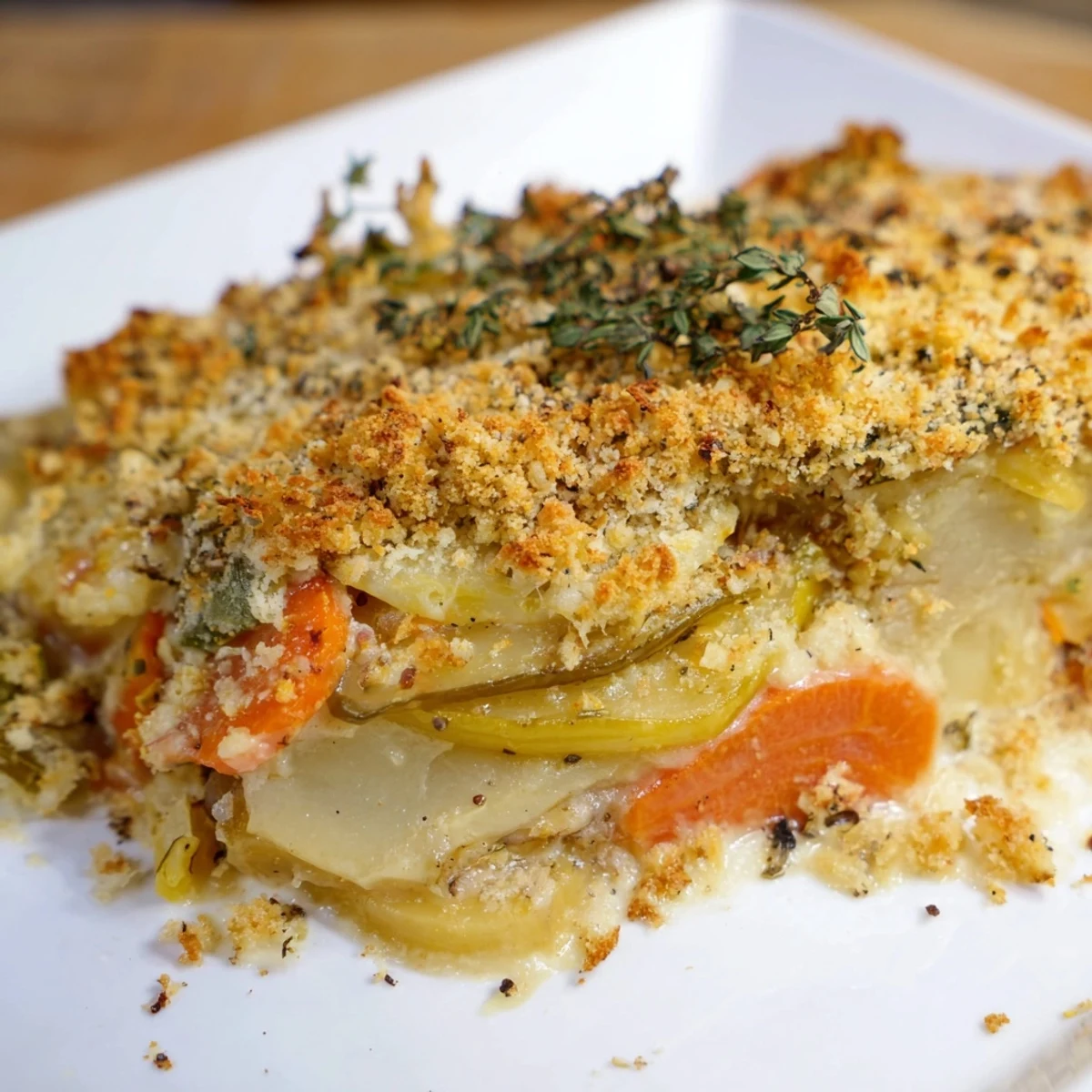
Save There is something deeply satisfying about transforming those humble winter roots into something this elegant and comforting.
Common Questions
- → What vegetables are best for this gratin?
-
Root vegetables like Yukon Gold potatoes, parsnips, carrots, rutabaga, and leeks provide a hearty and flavorful base for this dish.
- → How can I ensure the sauce is smooth and creamy?
-
Whisk the flour and butter roux carefully before gradually adding milk, stirring constantly until thickened without lumps.
- → Can I substitute the Gruyere cheese?
-
While Gruyere offers a nutty flavor, aged cheeses like Emmental or Comté are good alternatives.
- → What is the purpose of layering vegetables and sauce?
-
Layering ensures even cooking and distribution of creamy sauce and cheese, creating rich flavor in each bite.
- → How do I get a golden, crunchy topping?
-
Mix fresh breadcrumbs with melted butter and optional thyme, then sprinkle over the gratin before baking uncovered to achieve a crisp crust.